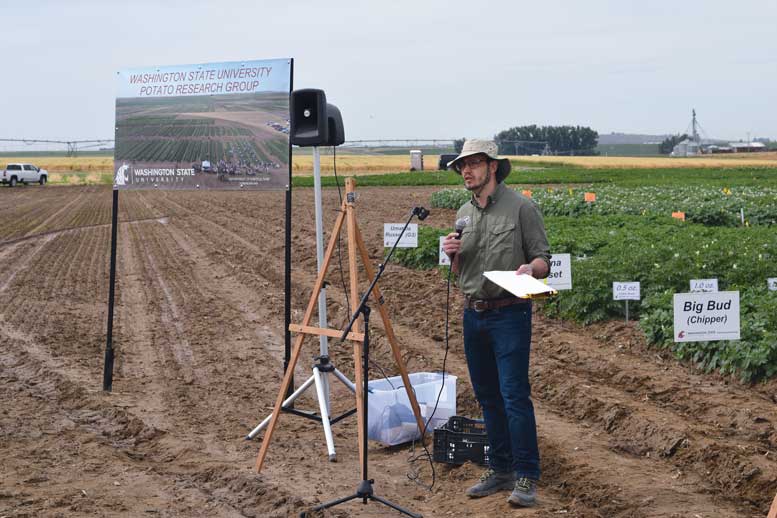
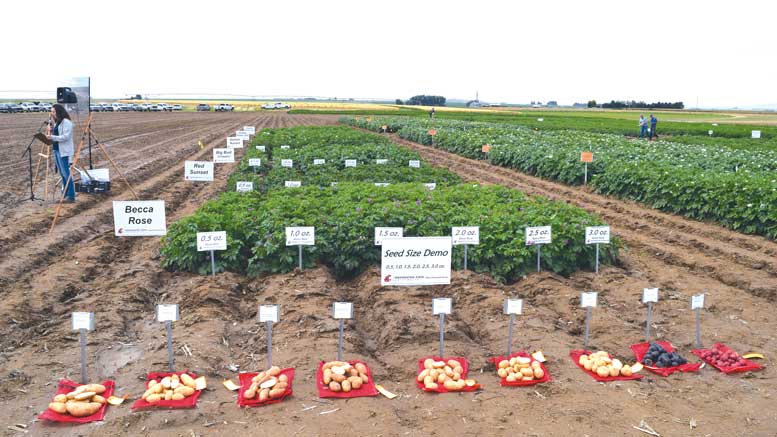
High temperatures have not been letting up in recent summers, and neither are researchers studying the impact of heat stress on potatoes. An update on an ongoing study on heat stress was among the more than a dozen topics on the agenda at the Washington State University Potato Field Day, held June 25 in Othello, Washington, where attendees also viewed the annual commercial seed lot trial.
Heat Stress Study
Jacob Blauer, a post-harvest physiologist at WSU, is studying how environmental stress impacts the productivity and storability of potatoes. He says heat stress is the interaction of three variables: intensity, duration and timing – and you have to consider all three to understand what’s happening to potato plants from a heat stress standpoint. To illustrate, he likened potato heat stress to traveling from the Pacific Northwest to a warm locale in the winter.
“We adapt to heat over time. If we were to go to Arizona in July, yes, it’s going to be hot. It’s Arizona. But it’s going to hit us differently in February,” Blauer said. “Our potatoes are no different. They can adapt to a certain amount of heat over time as long as it’s gradual and it’s consistent. But what happens when intermittent heat pops up? It’s just like us getting off that airplane and landing in Arizona and all of a sudden, it’s 97 degrees and we left 45-degree weather.”
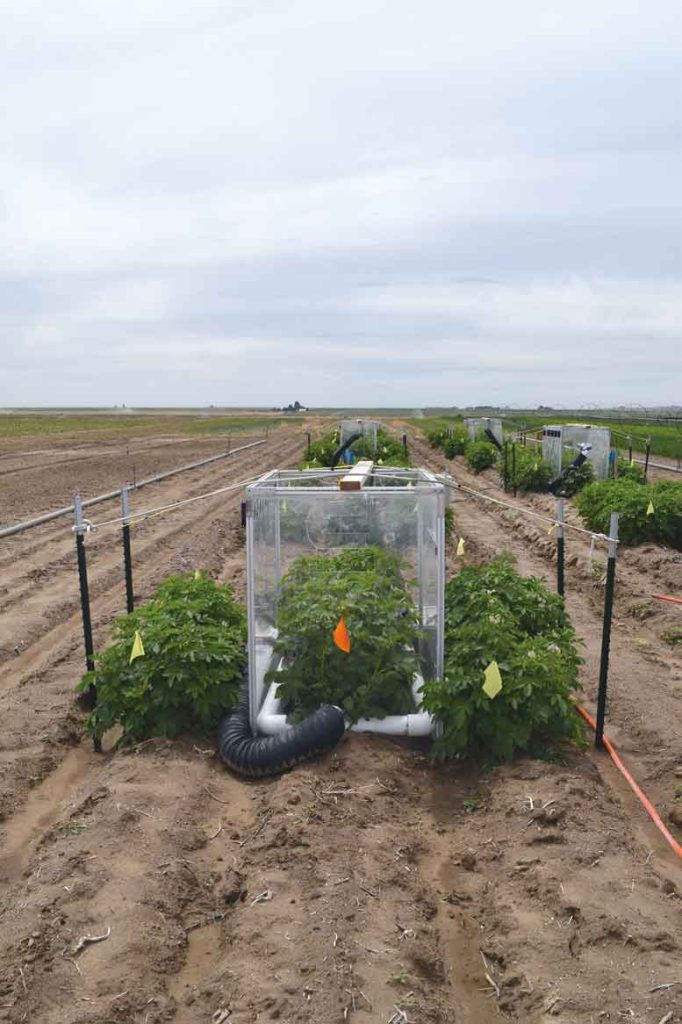
To study heat stress in the field, Blauer’s team has been using open-top heat boxes. With the boxes positioned around small groups of potato plants, the researchers can keep the temperature inside the box 10.5 degrees Celsius higher than the ambient temperature to simulate heat stress. Meanwhile, the open-top design allows the plants to experience irrigation, natural solar radiation and pest pressure, creating as natural conditions in the field as possible.
In 2025, the second year of the study, the researchers maintained the temperature differential for either nine days or 21 days and then removed the boxes and let the plants complete the season as usual. They found that plants exposed to heat stress produced a higher number of tubers and an increased number of misshapen tubers compared to the control. There was no change in total yield in the plants with nine days of heat stress, although the misshapen tubers reduced marketable yield. The 21-day heat stress treatment reduced yield by 40%, which mirrored the 2024 study, Blauer said. In addition, heat stress at tuberization caused no impact on sugar quality during short-term storage studies, whereas heat stress later in the season results in decreased sugar quality.
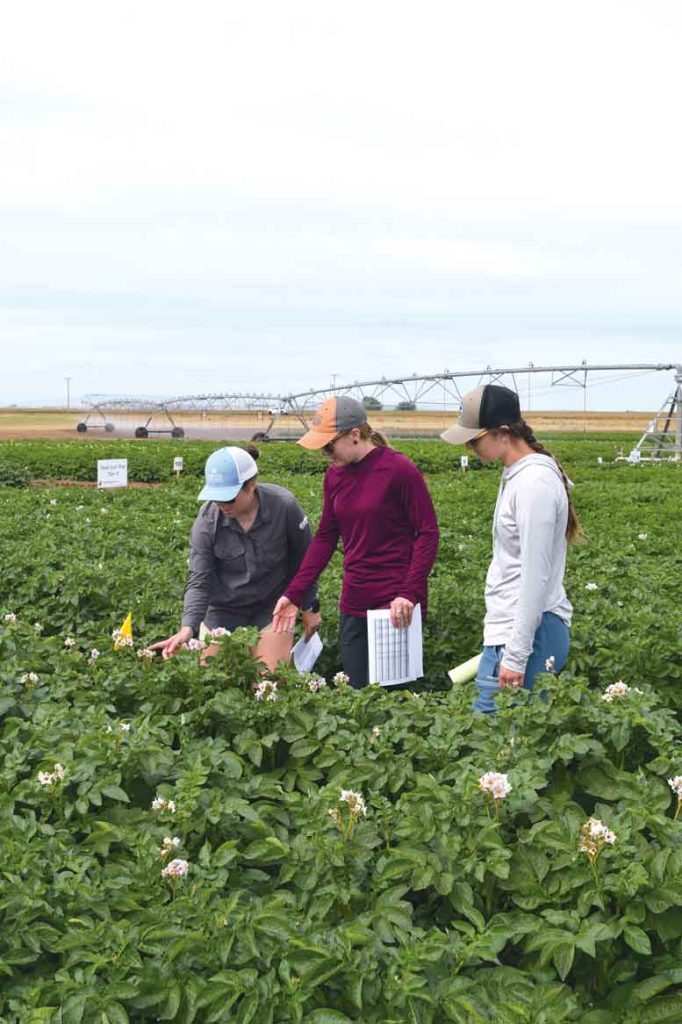
This year, Blauer used the heat boxes from July 31 through Aug. 20 to learn how mid- to late-season heat stress affects internal brown spot and after-cooking darkening.
Blauer’s work is designed to gain information that will help growers identify heat-tolerant varieties, adjust the timing of planting to avoid heat, and utilize mitigating factors in irrigation or fertility management when heat is forecasted.
Seed Lot Trial
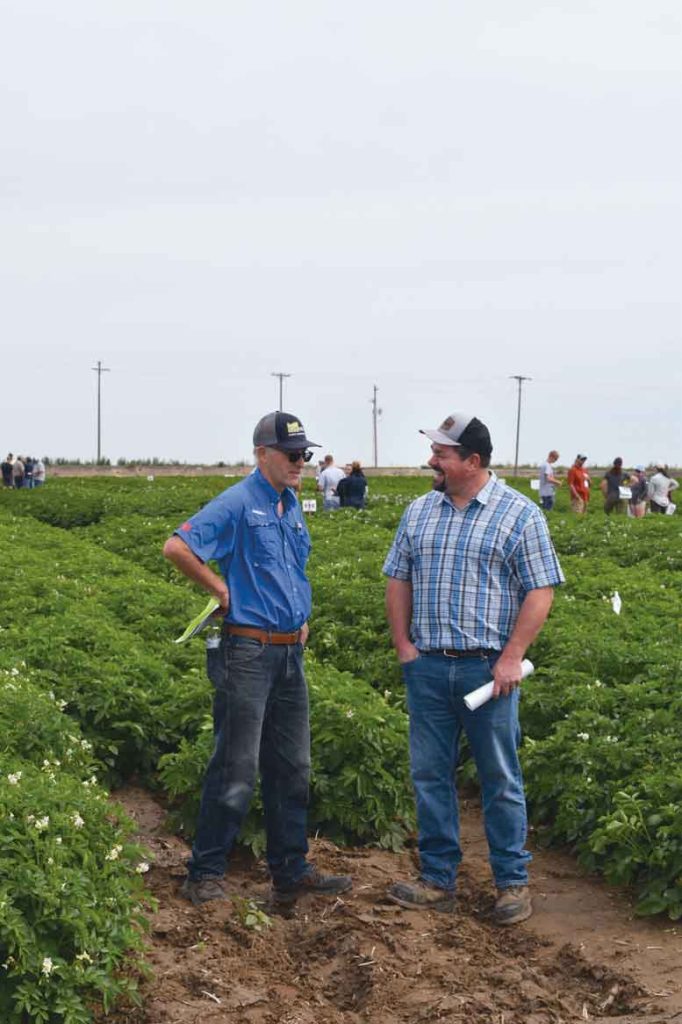
WSU hosted one of its largest field day turnouts yet, with nearly 300 attendees. Participation in the commercial seed lot trial, however, was a different story. For the second consecutive year, the seed lot trial had fewer than 200 entries, all-time lows in its 63-year history. WSU’s Mark Pavek said this might reflect reduced production acreage, the loss of some seed cutting operations and lack of grower participation.
“The seed lot trial is paid for by Washington growers, and they should utilize it by entering all of their seed lots each year,” Pavek said. “The seed lot trial provides a snapshot of the potatoes growing in Washington each year – the quality and varieties. This trial is a historical quality gauge of seed lots used to grow commercial Washington crops.”
This year’s seed lot entries represented 33 varieties from six states – Colorado, Idaho, Montana, Oregon, Utah and Washington – and Alberta, Canada. The quality of the seed appeared to be average to above average, relative to the past 10 years, Pavek said. While the majority of the seed lots emerged well and had low or no disease, evaluators did identify four lots with relatively high levels of Potato virus Y (PVY). In those lots, 5% to 11% of the plants displayed PVY symptoms.