|
Click to listen to this article
|
By Ching-Ting Feng, Ph.D., Plant Products Division Manager, JH Biotech, Inc.
Beneficial fungi of the genus Trichoderma are now widely recognized as valuable allies in sustainable agriculture. They promote crop growth, suppress harmful diseases, improve fertilizer efficiency and cooperate with other beneficial microbes in the soil. Instead of being a single-function inoculant, Trichoderma acts like a multi-tool that strengthens both plants and soil ecosystems.
Plant Growth and Nutrient Use
One of the most visible advantages of Trichoderma is its ability to stimulate plant growth. These fungi release compounds that mimic natural plant hormones such as auxins and gibberellins, encouraging stronger root development and more efficient nutrient absorption. They also help plants regulate stress hormones, which allows crops to better tolerate drought or other challenging conditions. Because roots colonized by Trichoderma can explore soil more effectively, fertilizer inputs are used more efficiently. Farmers often find that with Trichoderma inoculation, crops maintain good performance even when chemical fertilizer rates are reduced. This makes it a practical tool for lowering costs and minimizing nutrient losses to the environment.
Disease Suppression and Natural Defense
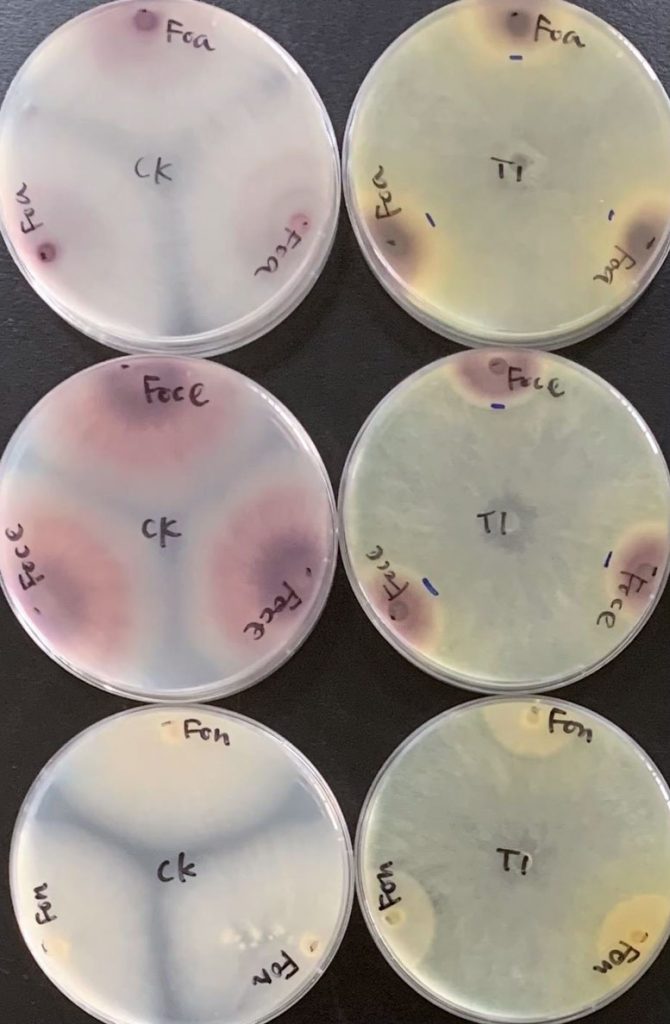
Trichoderma is best known for its disease control abilities. It directly attacks harmful fungi by competing for space, producing antifungal enzymes and, in some cases, even parasitizing pathogens. At the same time, it stimulates a plant’s natural immune system, preparing crops to defend themselves more effectively. When combined with other beneficial microbes, such as arbuscular mycorrhizal fungi (AMF), disease protection is even stronger. Together, they can reduce the severity of root diseases like Fusarium wilt and root-knot nematodes while boosting plant vigor. This integrated protection reduces the need for chemical fungicides, supporting safer and more sustainable crop management.
Partnerships With Other Microbes
Trichoderma often works in harmony with AMF and other beneficial soil organisms. These partnerships improve nutrient exchange between plants and microbes, increase root colonization and strengthen tolerance to stress. In vegetable crops such as melons, onions and tomatoes, the combination of Trichoderma with AMF has been shown to increase yields, enhance nutrient uptake and suppress soil-borne pests.
This synergy demonstrates that the future of soil health lies not in using one organism alone, but in designing microbial communities that cooperate to benefit the crop.
Tolerance to Stressful Environments
Beyond pathogens, Trichoderma helps crops withstand environmental stresses such as drought, salinity and heat. It does this by regulating antioxidant systems within plants, stabilizing cell metabolism and reducing the damage caused by excess reactive oxygen molecules. In practice, this means plants stay healthier for longer under stressful conditions, making the best use of limited water and nutrients.
Smarter Fertilizer Use
Because Trichoderma can solubilize nutrients like phosphorus and release them into plant-available forms, it plays a direct role in nutrient cycling. It also keeps roots healthier by preventing disease, which ensures plants can take up fertilizers consistently. Studies show that even with lower fertilizer application, crops treated with Trichoderma maintain strong growth and nutrient balance. This makes it a promising tool for farmers aiming to cut costs, meet environmental regulations, or move toward organic and regenerative practices.
Shaping the Soil Microbiome
Another benefit of Trichoderma is its ability to shape the broader soil community. By interacting with other microbes, it encourages the growth of beneficial bacteria and fungi that further support plant health. In some cases, it acts as a “microbiome modulator,” building a more resilient network of organisms that help crops thrive. This not only improves current yields but also contributes to long- term soil fertility and stability.
Conclusion
Trichoderma offers a wide spectrum of benefits: promoting plant growth, improving nutrient efficiency, suppressing diseases, supporting stress tolerance and fostering positive microbial partnerships. Its versatility makes it an essential tool in modern sustainable agriculture. When paired with good fertilizer management and other beneficial inoculants like AMF, Trichoderma helps farmers reduce chemical inputs, stabilize yields under stress and protect soil health for the future. By harnessing the power of this fungus, growers can move closer to a resilient and environmentally friendly farming system.
Author’s note: To learn more about the effects and application programs of Trichoderma products, please visit jhbiotech.com or contact our technical team at info@jhbiotech.com.