Story and photos by Dave Alexander, Publisher
-AMAZONPOLLY-ONLYWORDS-START-
-AMAZONPOLLY-ONLYWORDS-END-
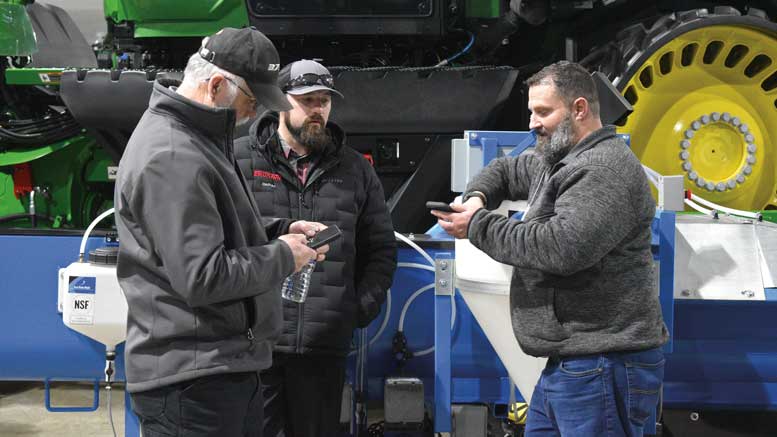
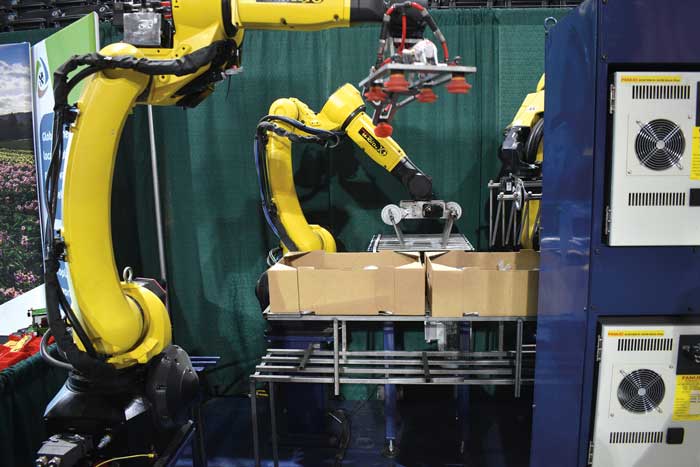
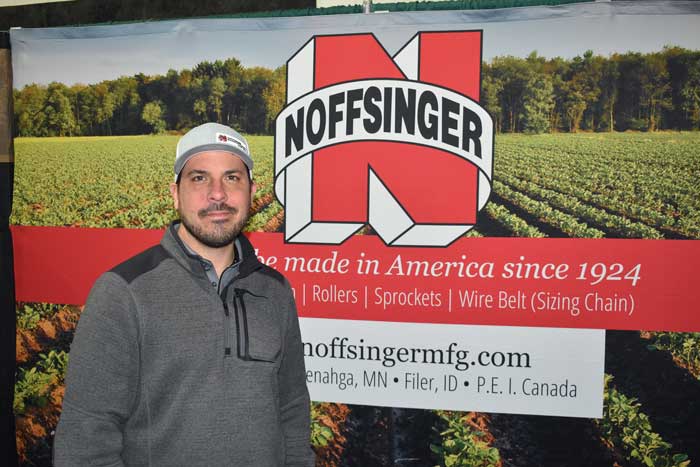
The Idaho Potato Conference and Eastern Idaho Ag Expo took place in Pocatello, Idaho, for the 58th time Jan. 20-22. The expo featured lots of shiny equipment and some new booths from previous years, giving attendees much to see. The conference, organized by University of Idaho, was packed with sessions on just about any topic relevant to potato growers, in English and in Spanish.
We had marked our calendar for one session that sounded particularly interesting and featured some heavy hitters from university research teams. “Busting Myths in Potato Agronomy” turned out to be an educational experience using “MythBusters,” a fixture on the Discovery Channel for more than a decade, as a fun format.
-AMAZONPOLLY-ONLYWORDS-START-
-AMAZONPOLLY-ONLYWORDS-END-
Myth #1: Maleic hydrazide (MH-30) will reduce little potatoes prior to harvest.
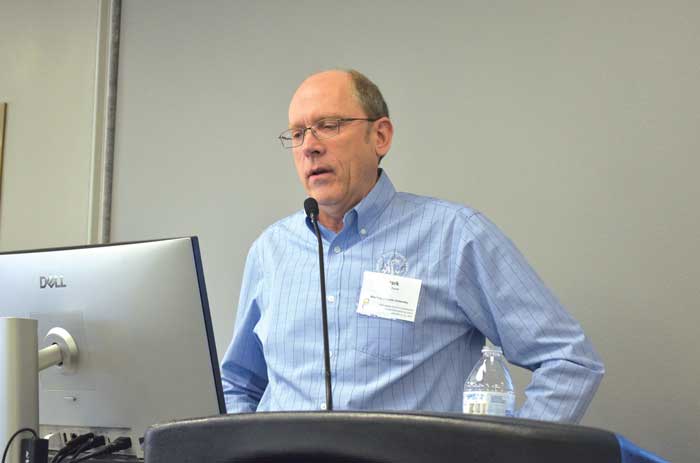
Presented by Mark Pavek, Washington State University
Some growers believe the recommended label applications of maleic hydrazide will knock off little potatoes, i.e. those under 4 ounces. MH-30 is a plant growth regulator, and its mode of action is to inhibit cell division, not expansion, so it can still expand and elongate potatoes. According to the label, it will improve tuber grade and shape, can be used for sprout control, reduces shrinkage and reduces volunteers. The label says nothing about small tubers.
Pavek said research over five years on several varieties shows that use of MH-30 actually increased the number of undersized tubers in all varieties tested except Alturas.
Verdict: Myth Busted – Use of MH-30 reduces external defects, but will increase the number of tubers under 4 ounces.
Myth #2: Potato petiole analysis always provides a real-time, accurate assessment of plant nutrient needs and should be used to guide fertilizer applications.
Presented by Mark Pavek, Washington State University
Efficient nitrogen (N) management is critical to growing a successful potato crop. Petiole analysis can provide useful, timely data about a plant’s nutrient status. But Pavek said relying on petiole analysis alone is like irrigating based on the appearance of the soil surface rather than what’s below. Soil analysis is critical to a good crop.
Informed fertilizer management means testing soil nutrient levels and targeting fertilizer rates combined with petioles. Petiole analysis should be used as a tool, not necessarily as a guide.
Verdict: Myth Busted – A profitable potato crop can be grown without using much or any petiole data as long as soil nutrient levels are known and fertilizer rates are targeted.
Myth #3: If the canopy looks good, irrigation is good.

Presented by Emily Bedwell, University of Idaho
Green leaves and vegetation above the surface is not always indicative of what’s happening beneath the soil surface where tuber development and growth is occurring. When wilting is observed, stress is occurring in plants, tuber damage has already been done and irrigation has not been managed well.
Plant stress starts below the soil. The potato is a shallow, rooted crop, and it can only uptake the water within that shallow soil. Shallow soil typically doesn’t have much water in it because it’s more exposed to the air and sun, and that’s where the quickest and most evaporation takes place.
Soil moisture must be checked below the surface and below shallow soil, down into the root zone. Bedwell said you can use irrigation sensors or the hand-feel method, but pairing the two will confirm your “feel” test and give you confidence that the sensors are doing their job.
Verdict: Myth Busted – Dig down a foot or so and check your crop’s water needs at the root zone.
Myth #4: A storage’s evaporative media should be replaced on a regular basis.
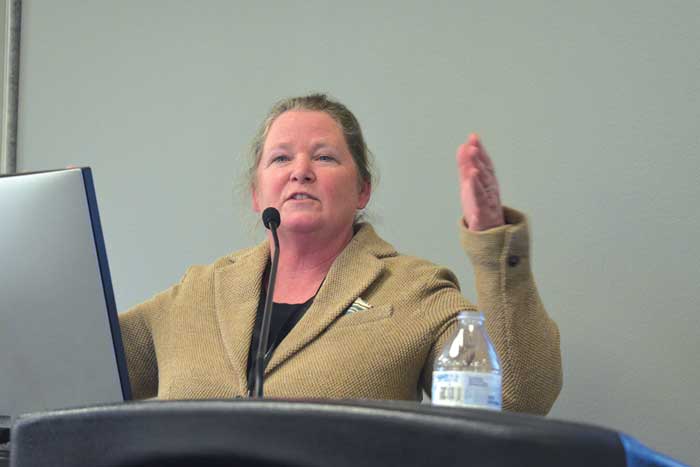
Presented by Nora Olsen, University of Idaho
A potato storage has been designed by the builder to provide proper cooling and humidification. Water mixes with air as it passes through the evaporative media, which keeps potatoes stored correctly and losses at a minimum. Over the years, this evaporative media, which is cellulose-coated crafted paper, can become clogged and dirty, making it less efficient.
When media is clogged or dirty, cooling capacity and airflow is reduced, and pressure drop and energy costs are increased. The system is no longer operating as it was designed, and it is no longer able to provide maximum cooling and temperature control.
Verdict: Myth Confirmed – Life expectancy of evaporative media is three to five years, but up to 10 with proper maintenance. Dirty media costs money.
Myth #5: Potatoes are most susceptible to hail damage at the time of flowering.
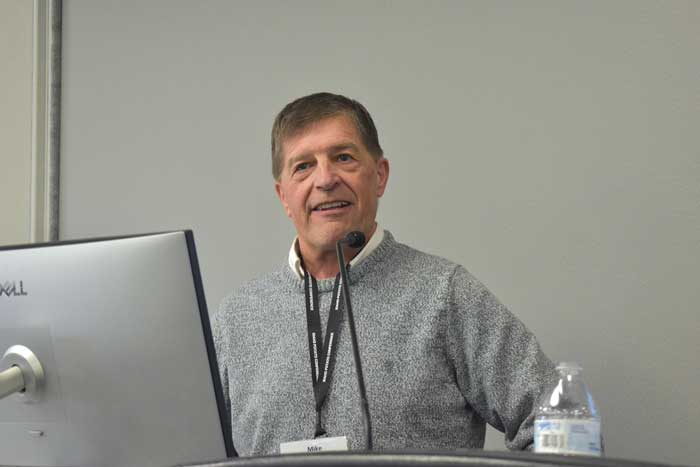
Presented by Mike Thornton, University of Idaho
It makes sense that the higher a potato plant’s defoliation, the more yield loss. Thornton said research has shown the most yield loss comes from 50% to full bloom, which is typically the early bulking stage for tubers.
Timing is the critical part. If hail damage occurs very early in the season, the crop has time to regrow, and there will be very little yield loss. If damage comes late in the year, there is already some yield and losses will be smaller. If damage occurs at early bulking, yield loss is most severe.
For this myth to be true, it has to be assumed that flowering is always synced with early bulking under all circumstances. But flowering tends to occur pretty early in plant development and pretty consistently most years. Early bulking, however, has a wider range that can fall outside blooming.
Verdict: Myth Busted – Flowering is not always synced with early bulking, and when blooms appear is also subject to variables like weather, day length, region and variety.
Myth #6: Higher respiration rates lead to higher weight losses.

Presented by Gustavo Teixeira, University of Idaho
In a study conducted by Teixeira, respiration rates and weight loss were calculated for Russet Burbank, Ivory Russet, Dakota Russet and Rainier Russet.
He found Dakota had the lowest respiration rate but the highest weight loss, directly refuting this myth.
Digging deeper, Teixeira tested diffusibility through the skin and found that Dakota was more prone to water loss than the other varieties.
Verdict: Myth Busted – This one doesn’t hold up – for Dakota anyway.