|
Click to listen to this article
|
Story and photos by Dave Alexander, Publisher
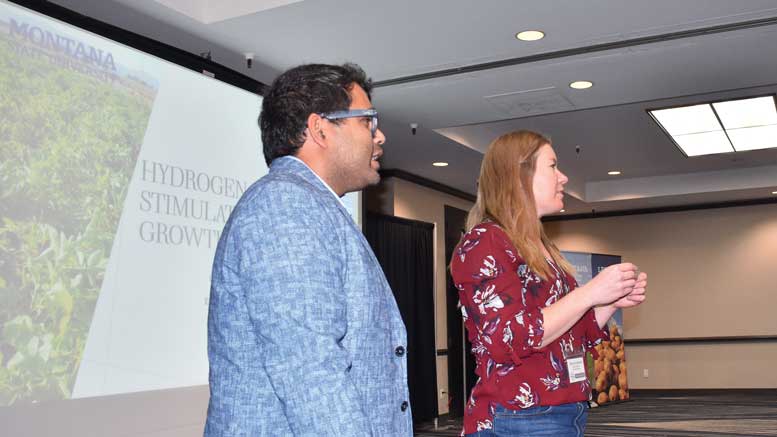
The Montana Seed Potato Seminar brings growers from Montana and Idaho to Missoula every November. This year, the seminar was held Nov. 12-13 and featured speakers, receptions and a trade show. Among the speakers was Paul Nugent with Montana State University (MSU) who gave a rundown of what the MSU Precision Ag Department has been working on.
A primary focus for the department is irrigation decision support and how to apply water more precisely in the field. The team at MSU is using information gathered to figure out things like runoff and water stress prevention, where water is needed and where the best economic return is for water used.
To make these irrigation decisions, MSU uses satellite and drone-supplied spectral sensing and commercial weather stations in the field that measure both crop stress and weather parameters. This setup allows real-time evapotranspiration (ET) measurement and tracks how much water the crop is actually using. From there, decisions can be made on how much water to put down.
MSU flew its drones approximately once a week, but sometimes weather-related flight gaps stretched to two weeks. Even without real-time data, the team has figured out how to use their previous measurements to predict how things were changing in the field and do it very accurately. They can put out two sensors, take measurements, then make irrigation recommendations based on those measurements and try and optimize irrigation across the field.
“I find this very, very exciting because even a lot of commercial applications out there aren’t really doing something like this,” Nugent said.
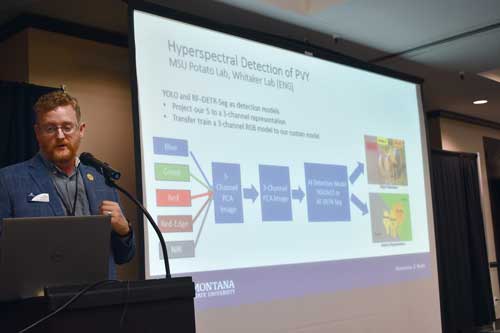
MSU is also working on identifying Potato virus Y-infected potatoes with hyperspectral imaging; a potato yield monitor that will identify, count and size objects on the conveyor leaving the harvester; autonomous robots; spray drones and virtual cattle fencing.