|
Click to listen to this article
|
Abundant supplies as harvest is underway.
Potato harvest is underway across the West, and the plentiful crop will likely keep returns below production costs for many growers.
As new crop enters the market, prices are under pressure. Fresh market potato supplies remain high, as many growers who faced contract acreage cuts shifted to planting fresh market potato varieties. With an expected surplus of fresh potatoes for the 2025 crop, some growers are storing their new harvest instead of shipping directly from the field. Fresh market potato shipments remain behind last year’s pace, and grower returns have been steadily declining. Fresh market prices saw seasonal declines in September. In Idaho prices fell by $1.82 per cwt in a month and Washington’s Columbia Basin is experiencing a steeper decrease of $2.17 per cwt. While prices typically stabilize by mid-October, they remain $3 to nearly $5 per cwt lower than 2024 levels. (Prices in 2024 were largely unprofitable.)
While conditions may shift as harvest progresses, processors have an ample supply. In June, potato usage for processing in AgWest states dropped by 13% compared to the previous year, while potato stocks nearly doubled, signaling a slowdown in processing and an abundance of potatoes still in storage.
Meanwhile, potato retail sales rose while the average price paid declined from July 2024 through June 2025, according to Potatoes USA. Retail sales volume for potato products increased by 2%, driven by strong gains in frozen potatoes, fresh potatoes, and deli-prepared products. Meanwhile, dehydrated and canned potato products saw declines. Potato chips and refrigerated products remained steady. However, consumers paid an average of 5% less per pound compared to the previous year, with Russet potatoes experiencing the sharpest retail price drop at 11% per pound.
Profitability
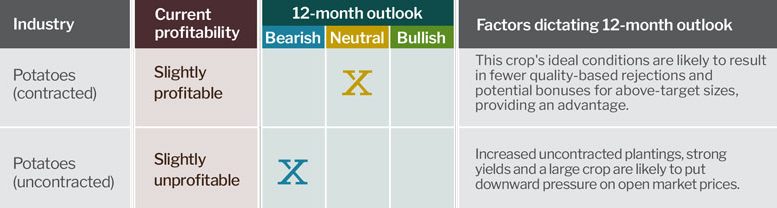
Potatoes (Contracted): Slightly profitable – Neutral 12-month outlook
Potatoes (Uncontracted): Slightly unprofitable – Bearish 12-month outlook
This crop’s ideal conditions are likely to result in fewer quality-based rejections and potential bonuses for above-target sizes, providing an advantage.
Increased uncontracted plantings, strong yields and a large crop are likely to put downward pressure on open market prices.
SOURCE: AGWEST